Bio:
Polina Hadzhiyankova is a sports psychologist and a former professional basketball player. She has been part of teams from a number of European clubs in Spain, Germany, Switzerland, and Italy. She has also played in the US college championship, in Division I at Iona College, New York.
She holds a bachelor's degree in psychology from the same university, as well as a master's degree in Sports Psychology from the National Sports Academy "Vasil Levski," and is currently completing her PhD there. She is a member of FEPSAC (European Federation of Sport Psychology), as well as the Bulgarian representative of ENYSSP (European Network of Young Specialists in Sport Psychology).
She is a lecturer in sports psychology at the "Bio Fit" sports college. In addition to working individually with athletes and coaches, she also works with several football academies. She is also part of the team at the Bulgarian National Wheelchair Basketball Team.
The interview
Poli, thank you for agreeing to be a guest expert at "Media Psychology" during the week we are dedicating to sports and mental health. You recently became the mother of a baby girl. How are you in the first days after the most exciting event?
Hello! I feel great. Neither the tiredness nor the lack of sleep can compare to the incredible feelings that the new family member brings. I worked until the last evening of the ninth month before going into the hospital — I was extremely active throughout the entire pregnancy, because I felt fit, for which I am very grateful. Now, however, I am ready to give myself a well-deserved rest and devote myself to my daughter.
Will you have time for sports now?
I'm a very organized person, and I'll do everything possible, after the mandatory recovery period recommended by the doctors, to keep doing sports, however little time I manage to steal for it. If a person has the desire, there is always a way.
Sports after childbirth
As a sports psychologist, can you tell us whether sports after childbirth reduces the chances of postpartum depression?
Of course it helps. Once they become mothers, women stay at home, alone with their thoughts, and if those thoughts are not positive and healthy — depressive states can develop. It's important for women to be aware, to know that this is a period in life that sometimes passes very quickly, and the most valuable thing is to enjoy it. If they manage to find time for other activities — to train, to read, to learn (which can also be done at home in the 1 or 2 hours when the baby is sleeping) — they will be much more fulfilled and calm.
How often is it recommended to do sports?
That is strictly individual. A lot depends on what our movement culture is, whether we have ever played sports, what our current physical condition is, and so on.
What did sports teach you?
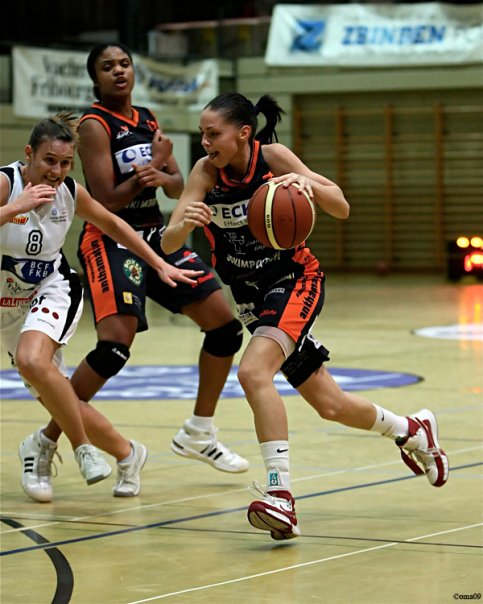
There's no short answer here. There are so many qualities that sports build. Starting with responsibility, discipline, independence, hard work, character building, teamwork, social skills, adaptability, fighting spirit, and many others.
Would you like your daughter to also play sports professionally, and if so, in what direction would you point her?
I would be happy if she plays sports, but whether she'll go down that path professionally will be entirely her choice. The most important thing is for children to be happy in what they do.
Your mother, Nina Hadzhiyankova, is one of our legendary basketball players. How does it affect a child's psyche to have such a successful close relative as a role model?
It's certainly not easy, especially when you choose to go down the same path and the constant comparisons are inevitable. To be honest, this is a factor that either tempers you or breaks you down; it depends on the person. Definitely, when I was competing abroad, things were better for me, because there they evaluated me solely on the basis of my qualities on the court, and they were not biased or predisposed in a particular way.
Sports and mental health
Even children know that sports relieve us mentally, but how exactly does this happen in our brain and body when we are physically active?
As the heart rate increases during a workout, blood flow to the brain increases. As blood flow increases, our brain is exposed to more oxygen and nutrients. Exercise also triggers the release of beneficial proteins in the brain.
These nourishing proteins keep brain cells (also known as neurons) healthy and encourage the growth of new neurons. Neurons are the working building blocks of the brain. As a result, the health of individual neurons is important for the overall health of the brain. Exercise lifts our mood and reduces stress.
When we exercise, our body releases hormones, such as dopamine and endorphins, into our brain, which make us feel happy. Not only does our brain release the good-mood hormones, but exercise also helps our brain to get rid of the hormones that make us feel stressed and anxious.
People who play sports are happier and less stressed than those who don't. Regular exercise can also help us control our emotions when we feel angry or upset.
Is there a sport or physical activity that works fastest on dark thoughts?
No, the most important thing is movement. Whether it'll be yoga, walking, dancing, strength training, or swimming — that's a personal choice.
How does wanting to be always #1 affect the psyche?
There's nothing wrong with high motivation, but it is also of essential importance to have proper self-assessment. If we don't have it, then high goals become totally unrealistic, and we can only suffer from this. That's why the environment in which an athlete lives and trains — the people around them — is also of essential importance.
What can break an athlete?
Many things. Loss, disappointment, being underestimated, low self-esteem, a string of failures, injuries…
Motivation in sports
And what can motivate them, year after year, to keep fighting?
It's very individual what motivates each person. Some athletes have been fighting for their parents' approval since childhood, and this continues throughout their career and motivates them to make their parents proud of them. Sometimes even failures are motivating. Competition too — the desire to be first and the best at what you do.
I assume that the different characters of athletes handle the pressure in different ways. If that's true, can you summarize, drawing on your experience, what kind of character is more resilient?
Of course, confidence in our own abilities helps. It's very interesting to note that self-confidence does not come from past successes or failures, but from the way we talk to ourselves. Regardless of whether we have lost or won, what's key is what our inner dialogue is — and this too is a kind of mental training, and if we don't have it as a self-regulating component, it is absolutely possible, when working with a sports psychologist, for us to acquire it as a skill that will help us a lot.
Children-athletes
What qualities should a parent cultivate in their children — athletes, so that they can withstand the pressure, regardless of the character they were born with?
It would be good for children to be taught how to work, to take on responsibilities, to be taught from a young age to follow rules, to delay pleasure or reward — that is, to be patient, that not everything happens in the moment — to be consistent, not to look for excuses outside themselves at the slightest failure… this is also something that children sometimes copy from their parents.
It would be good for parents, from an early age, to show them that the most important thing is for them to have fun, to let them drive the train, to stay engaged in sports for as long as possible — and not to tell them how much money they can make, how every win is at any cost, how they're weak if they cry after a loss, to compare them with other children, and so on.
This can only turn the child off from sports, negatively affect their self-esteem, and damage the bond between parent and child — it would lead to nothing good in the long run…
Which coach/mentor is the good-enough coach/mentor?
Not the one who treats everyone the same and believes that this is the most correct approach because it doesn't divide them, but the one who has an individual approach to each athlete according to their particular character, temperament, sporting and technical abilities, age, gender, social status, needs, and so on.
About the profession of sports psychologist
Let's also talk about your work as a sports psychologist. If you can share, what are the most common problems of the people who visit a sports psychologist?

There are many. Starting with pre-competition anxiety, pre-start apathy, going through loss of motivation, over-motivation, perfectionism, interpersonal conflicts within the team with the coach or teammates, depressive states as a result of injuries or distrust on the part of the coach, problems with parents' high expectations, and many others.
I know your schedule is always full. What helps you to be a good sports psychologist?
I think that having been in their shoes, and my whole journey as a professional athlete, helps me the most. Of course, I don't downplay the education I have, but no matter how many diplomas you have, when you are not speaking the same language as your clients, there is no way they can truly trust you.
How do you relax when you've had a busy day?
I relax best by spending time with my family, and recently I learned to turn off my phone when I'm resting. It's very pleasant.
To contact Polina Hadzhiyankova:
Phone: 0888552283
Email: polihadjiyankova@abv.bg
Instagram: poli.sport