Who stands at the top of Maslow's pyramid? What are the main characteristics typical of just two percent of humanity? Find out more in today's article.
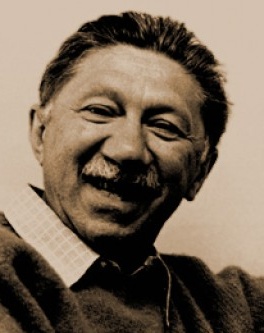
Biography
Abraham Harold Maslow (April 1, 1908 – June 8, 1970) is a well-known American psychologist whose name is most often associated today with the pyramid of needs, also known as Maslow's pyramid. Beyond that, Maslow contributed to the development of psychology and psychotherapy in recent decades through one of the major schools of psychology — humanistic psychology. To this we add his research on the topic of self-actualization.
Humanistic psychology
Humanistic psychology gave rise to several different therapies, all guided by the idea that people possess the inner resources for growth and healing. The most famous of them is the client-centered therapy developed by Carl Rogers.
In contrast to most psychologists before Maslow, who analyzed and treated the sick and the abnormal, he focused on positive qualities. Unlike his predecessors, he didn't treat people as a "bag of symptoms."
Maslow called on people to acknowledge their basic needs before tackling their higher needs and ultimately self-realizing/self-actualizing.
A 2002 survey ranked Maslow as the tenth most cited psychologist of the 20th century.
The self-actualized person lives creatively and uses their potential to the fullest.
A. Maslow
Core principles of humanistic psychology
A person's current functioning is most important. As a result, humanists emphasize that we live "here and now," rather than digging into the past or trying to predict the future.
To be psychologically healthy, people must take personal responsibility for their actions, whether the actions are positive or negative.
Every person, simply because they exist, is by their very nature already worthy. Although any given action may be negative, those actions do not cancel out a person's worth.
The ultimate goal of life is to achieve personal growth and understanding. Only through constant self-improvement and self-understanding can the individual be truly happy. Humanistic psychologists believe that every person is born with the desire to realize their full potential, to reach a level of "self-actualization." The main point of this new movement, which reached its peak in the 1960s, is to emphasize the positive potential of human beings.
Become who you are!
Nietzsche
Characteristics of self-actualizers
According to Abraham Maslow, only two percent of people reach the top of his pyramid and are self-actualizing — that is, they manage to reach their full potential. The eminent psychologist based his theory partly on his own assumptions and beliefs about human potential, and partly on case studies of people from his own circle, as well as historical figures whom he believed to have self-actualized. His study included Albert Einstein, Henry David Thoreau, Lincoln, Thomas Jefferson, Eleanor Roosevelt, and others.
People who self-actualize possess an unusual ability to detect what is false, fake, and dishonest in a personality, and to evaluate people in general accurately and effectively.
A. Maslow
Common traits
Maslow studied the lives of each of these people in order to assess the qualities common to all those who had reached self-actualization. In his research, Maslow found that self-actualizers do indeed have similar traits.
Whether they are famous or unknown, educated or not, rich or poor, self-actualizers tend to share the following traits, which form a common profile:
Clear perception of reality
Self-actualizers are able to evaluate situations correctly and honestly. They are very sensitive to superficial and dishonest people and are able to see hidden and confused realities more quickly and more accurately than others.
Acceptance
Self-actualizers accept their own human nature with all its flaws. The flaws of others and the contradictions of the human condition are accepted with humor and tolerance. There is a relative absence of guilt, of paralyzing shame, and of extreme or severe anxiety in them.
Spontaneity
True to themselves, rather than being what others expect.
Task- and problem-oriented
Self-actualizers are problem-centered, not ego-centered. They have a mission in life, a task to accomplish, a problem outside themselves that harnesses much of their energy.
Comfortable with solitude
Despite their satisfying relationships with others, self-actualizing people value solitude and are comfortable being alone.
Autonomy
Self-actualizers are not dependent on outside authority or other people, on the physical and social environment. They tend to be inventive and independent.
Fresh outlook
The self-actualizer has the wonderful ability to appreciate, again and again, freshly and naively, the goods of life, full of awe, pleasure, wonder, even ecstasy, however dull these experiences may be to others. There is an "innocence in what is observed," like that of a child.
Peak experiences
All of Maslow's subjects reported the frequent occurrence of peak or mystical experiences (temporary moments of self-actualization). These instances are marked by feelings of ecstasy, harmony, and deep meaning. Self-actualizers report feeling at one with the universe, stronger and calmer than ever, full of light, beauty, goodness, and so on.
Belonging to the human race
According to Maslow, self-actualizers possess "Gemeinschaftsgefühl," which refers to "social interest, a sense of community, or a feeling of unity with all of humanity." They feel compassion and affection for human beings.
Humility and respect
Democratic-mindedness is typical of all of the self-actualizing personalities Maslow studied. They can be friendly with anyone, regardless of class, education, political beliefs, race, or skin color, as long as they are of suitable character.
Deep interpersonal relationships
The interpersonal relationships of self-actualizers are marked by deep connections. This love does not mean a lack of judgment, and there is a realistic and harsh assessment of the hypocritical, the pretentious, the puffed-up, and the self-absorbed. Their circle of friends is rather narrow.
Ethics
Strongly ethical, with definite moral standards. They always do what is right and never what is wrong. Needless to say, their notions of right and wrong, of good and evil, are often not the commonly accepted ones.
Non-hostile sense of humor
They don't find funny what most people laugh at. If the humor is hostile (making people laugh by hurting someone), or is humor of superiority, or is rebellion against authority, they don't laugh.
Creativity
All those studied, without exception, in one way or another demonstrate a special kind of creativity, originality, and inventiveness. This is not about genius-level creativity like Mozart's, but about the desire and the action toward creating something.
This article uses quotes from Abraham Maslow's book "Motivation and Personality," Kibea Publishing

Become an author at mediapsihologia.com. Write to us at info@mediapsihologia.com