As a mother of twins, exchanging information with people in the same situation has always been of crucial importance for my physical and mental survival. In my many encounters with parents of twins, I have often heard phrases like "Sometimes I just can't take it anymore and I start screaming," or "I yelled at the child louder than I wanted to," or "For the first time in my life I seriously thought about jumping off the balcony."
The constant self-blame
All these confessions are accompanied by many self-accusations: "I am a terrible mother" or "Will the neighbors call Child Protective Services?" Comments like these, even with a certain dose of humor, are signals of high levels of stress in parents of twins.
Most often it is mothers who suffer from the common manifestations of stress. The heavy demands of caregiving and the doubled requirements make parents particularly susceptible to stress. But specialists say that there are measures that can help reduce the emotional and physical damage of double caregiving. Physical, mental, and emotional tension or strain, in which our body is informing us that we have overloaded our coping mechanisms.

A double, triple dose of stress per day
The mothers I quoted above had felt overloaded and out of mental and physical balance. They have enough energy and nourishing love to give themselves to one child, but splitting themselves between two, three, four, or more is something they cannot manage. They react to this stress with irritability and edginess, or they want to escape from the source of stress — their babies. The strong clash of emotions comes from the unconditional love and the often-occurring hostility they feel toward their children at the same time. This contributes to the increase in stress. For example, a mother who shouts at her child a little more loudly out of anger and frustration then experiences a strong feeling of guilt for a long time afterward. A mother who has suicidal thoughts may truly long to escape from the overwhelming demands of caring for the babies, may feel offended that her efforts are underappreciated. In addition to being physically exhausted, these women can be emotionally drained by feelings of anger, disappointment, sadness, guilt, depression, or self-pity.
Fathers of twins
Although fathers do not express their emotions as easily as mothers, they too can suffer from stress. Most fathers of twins feel neglected, feel jealous of the attention given to the babies, and are weighed down by the pressure of additional financial demands. They are, however, in a position to escape these tensions in a way that is not possible for mothers. Fathers can spend extra hours at their workplace. This sets the stage for even more stress in their wives, who, more than ever, need their cooperation and help at home.
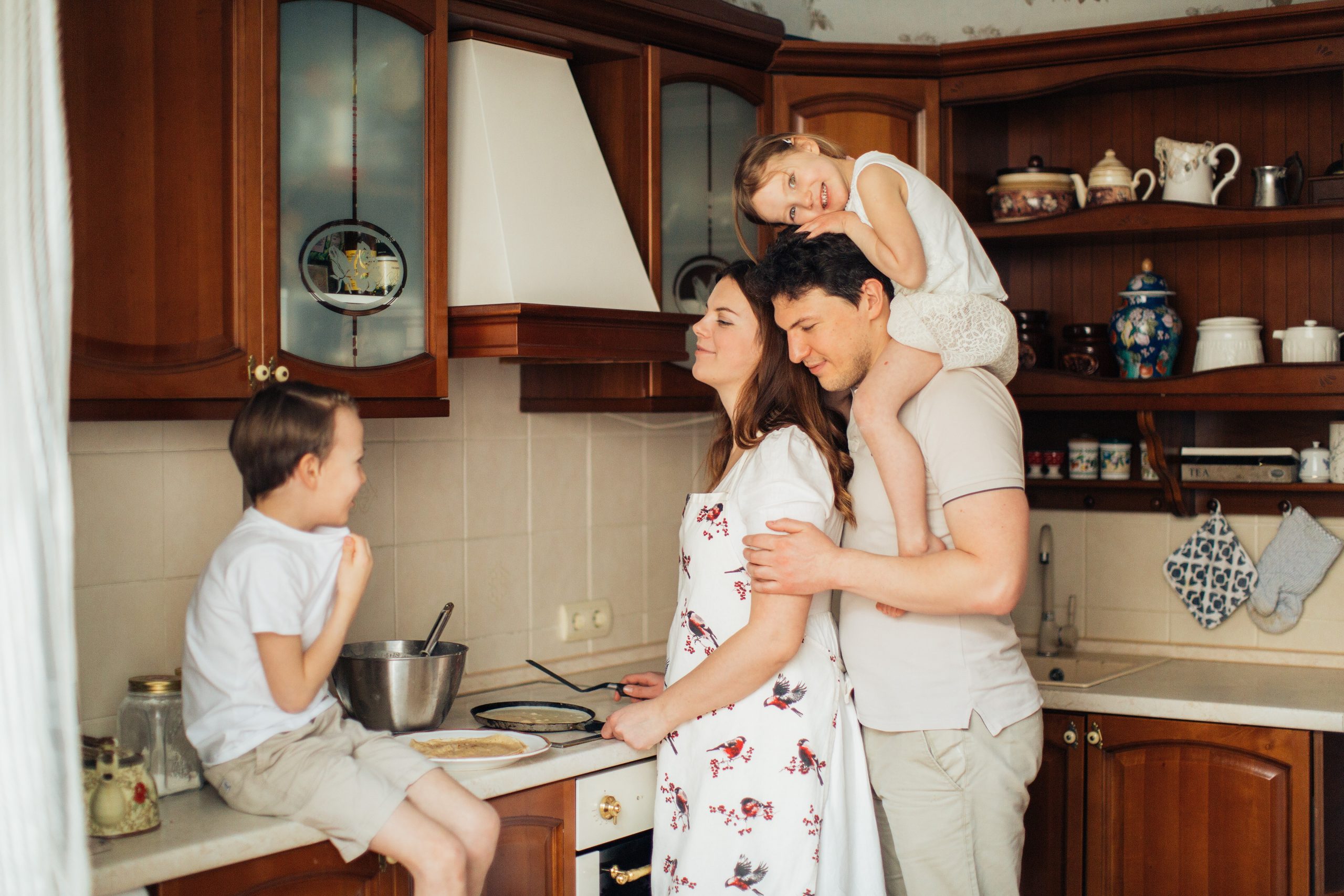
"I never understood before what it meant for husband and wife to be a good team"
On this subject, one mother of twins once shared, "I never understood before what it meant for husband and wife to be a good team." Working well together and good organization between parents of twins is one of the factors that reduces stress. If this is missing, both parents often show a drop in energy, chronic fatigue, low self-esteem, and lack of time for themselves, which inevitably contributes to the intensification of stress in the family of twins.
24/7 on the carousel — physical stress
In the first weeks and months, the main reason for physical stress among parents of twins can be lack of sleep and irregular eating. For example, parents of twins were "on duty" through the night during the first 3 months, when the children woke up frequently — the father took the feeding and diaper-changing shift between midnight and 4 a.m., while the mother slept a little, and then she took over after 4 a.m. so that the father could sleep a bit before the workday. Although there is no magic remedy for coping with the physical stress of caring for twins, especially newborns, the first thing parents need to do is to find help. They should not be afraid to ask for the help of relatives and friends, as well as nannies.

Distribution of forces
It makes things easier for everyone if there are concrete tasks, such as feeding, ironing the children's clothes, taking the children for a walk, shopping, cleaning the kitchen, preparing food, bathing — and being relieved for a one- or two-hour nap. It is useful for parents to try to eat often and in small portions, with raw vegetables and fruit, whole-grain sandwiches, eggs, or soup on the menu. They should not fall into the trap of consuming coffee, energy drinks, or foods high in sugar and fat. Sufficient vitamin intake, especially of B-complex vitamins, is associated with reducing stress. Physical exercise is not appropriate when there is total physical exhaustion, but regular movement — walks, stretch yoga, swimming, cycling — can actually work well in the direction of reducing stress. Meditation also reduces stress and raises energy levels, if you have the time, the space, and the calm to meditate at all.
Emotional issues
Physical exhaustion often turns into emotional stress. When parents feel drained, but the demands of the children do not stop, depression, irritability, and a sense of inadequacy are a frequent emotional response. You'll hear a mother of twins say: "I'd feel wonderful if I could just get away for a little while or you could get some sleep." Then, when the physical needs are met, the emotion begins to move in a positive direction. A woman whose self-image is one of "Supermom" is also a candidate for high levels of stress.

The Supermoms
The "Superwoman" of the TV commercial usually handles several crises at once, but such expectations in real life, especially when raising twins, can have catastrophic effects. If her idea of being a good mother means always being well-organized and having full control, weakening this image can lead to a feeling of losing a precious part of her "Supermom" identity. And this is equivalent to a sense of failure. Adjusting such unrealistic expectations to fit into everyday life can help relieve such emotional tensions. This can happen with the help of a psychologist or a supportive environment, before which the mother can acknowledge her own abilities and limits and lower her expectations, especially of herself.
Letting ourselves be human
Parents of twins have a strong need for time for themselves to rediscover the roles of mother, father, husband, wife, professional, homemaker, as well as finding time for a favorite occupation at least once a week — this is essential for reducing emotional stress of any kind. One mother of twins, for example, shared that going for a massage and to the hairdresser recharges her with a triple dose of energy, and she copes more easily with being a mother. Another said that her threshold of patience during the first 3 years was 4 hours before she would become irritable and need a "little break." The hours of "patience" gradually grow longer as the children get older. A similar "grateful" feeling and appreciation of time is when parents go out to eat and are served. A mother of twins shared that her midday meal during work hours is a ritual that she does not miss, because it is her one undisturbed meal of the day.

The little "indulgences" that others take for granted
Such "indulgences" are usually incomprehensible to people who have not raised twins and have not experienced the double servicing before, during, and after a meal, as well as all the accompanying incidents at the table that turn an ordinary meal into an adventure. Many parents of twins are admired for their flexibility, humor, and endurance. Support from friends, relatives, and the wider community can be an emotional lifeline. Often a simple conversation with other parents of twins provides emotional release and a chance to exchange useful tips. Even if the problems differ, it is reassuring to know you are not alone.
The stress in communication
Twins live in an extremely competitive environment. Every moment with mom is a moment of struggle for her attention. This little-known fact is widely discussed in Russian and American psychological literature devoted to twins. Psychologists there have publicized the issue to the wider public, because it has become important for the development and good psychological growth of the many sets of twins, triplets, and so on. In fact, the competitiveness can be reduced or, conversely, intensified by the people in the environment around the twins. The most commonly asked questions, "Who was born first?" and "Which of the two is more obedient?" should be avoided. Studies show that they leave lasting marks of inferiority on one of the twins by giving conditional precedence to the other.

Who is the most-most-most among twins
A huge part of the stress for parents of twins also comes from the conscious and competent communication aimed at reducing competition between the children. This includes exceptional creativity in the many situations that require precise division "equally," thought put into every word, and actions in the direction of not shortchanging either of the two (or three or more) twins. They should not be compared and subjected to analysis. Something that always tempts relatives and family friends, who race to ask questions like "Who is more smiley?" "Who is more grumpy?" Such questions cannot be avoided, because there will always be people who don't know — but the parents' difficult role is to explain to the children their wonderful individuality and the great interest people have in twins, which also gives rise to inappropriate questions. If, with one child, a mother is unconditionally and fully devoted, then with two or more children, during the first few years, she has to constantly say, show, and prove how much she loves both children endlessly and unconditionally.
Conflicts in twos / in threes
Part of the communication stress is also the frequent need to deal with conflicts. An advantage of twins after the 3rd-4th year is that they begin to play more with each other, but joint games give rise to many conflicts that often strain the parents and require deft and skillful handling of the situation. The parent should try to remain neutral and, if possible, intervene without resolving the conflict in favor of either side, while remaining fair and firm. Especially when violence is involved. Twins should not be left with a feeling of impunity for one and eternal guilt for the other (because of one's leadership or particularities of character).

I win — you win
The parent should keep calm during a conflict and handle it by applying conflict-resolution techniques — for example, through the technique of RESOLUTION THROUGH COOPERATION — I win — YOU win!!!* (the best way to resolve a conflict by directing the energy toward different possibilities).
*We add a useful comment from the mother of twins, Di Klisarska, on the conflict-resolution technique: "The 'I win — you win' technique is a basic tool for turning an 'enemy attack' into cooperation, but with somewhat older children (4-7 years), it often leaves them with the feeling of 'you or me.' This way, quite consciously, one child is left with the attitude that they made a compromise, and subconsciously remains in a defensive position. A successful 'maneuver' to return to productive communication with the children is 'going back to needs.' It is very important to present the needs of the two sides as complementary, not conflicting.
Financial stress
Financial pressure is yet another factor that further complicates the lives of parents of two or more babies. With twins, it is common to buy quality already-used equipment and clothing, as well as to exchange items with other families. Childcare also costs more and is hard to find. This puts the mother in front of the dilemma of whether to continue her career or to dedicate another year or two to her children, even if on a tight budget.
One mother of twins returned to work, giving 80% of her salary to a babysitter, simply because her job was at risk. At that time she felt enormous guilt over not being at home, where they desperately needed her. There are also women who prefer to raise their children, and the only salary at home is brought in by the father. In such situations, women experience a huge inner conflict. Fathers should be sensitive to these issues, when the double burden of motherhood makes their wives feel as if they are losing a lot from two different worlds.

Work or home?
One of the vital factors in reducing stress remains the recognition a person receives for their work, for what they do, regardless of its nature. A simple "Thanks for trying!" at 3 in the morning, said to a father who has gotten up to soothe crying babies, can achieve much more than criticism for inappropriate care. Gratitude for others' efforts and sensitivity to others' needs help make stress more bearable. As one mother of twins said with a sigh: "There's no way to relax for long." There are no formulas, techniques, and guidelines that work instantly and reliably for every family. But efforts to reduce stress and to balance daily life have the power to turn stress into strength, and trauma into triumph.

To reduce stress, do this!
1. Schedule a consultation with a psychologist, a specialist in parental competence
2. Seek help from friends, relatives, a babysitter, or other families with twins
3. Sleep wherever and whenever you can
4. Eat well
5. Exercise regularly (walking, jogging, swimming, yoga, aerobics, dance, or whatever you like)
6. Find "sacred" time for yourself — daily or weekly
7. Keep expectations realistic and flexible
8. Finish one task before starting the next
9. Believe in yourself!

To reduce stress, do NOT do this!
1. Isolate yourself at home
2. Become dependent on drugs and alcohol
3. Blame yourself or your partner for the stress
4. Try to be "Supermom," striving to handle everything on your own
5. Sacrifice fun and enjoyment in pursuit of perfect efficiency
6. Use the "sacred" time for housework or shopping
7. Expect your needs to be magically and telepathically understood, without asking for help
8. Give up!