Who falls victim to anxiety most often?
We live at a fast pace, trying to keep up with everything, juggle several responsibilities at once, torn between family, work, personal life, and all kinds of commitments. Just the thought of all this is stressful and nerve-wracking. And the best friend of stress and tension is anxiety.
Anxiety is one of the most common mental conditions in people, and one of the most unpleasant. It moves beyond the stage of worry and nerves and becomes a regular companion of ours whenever we step outside our comfort zone in any way.

The most frequent victims of anxiety turn out to be women. It's especially pronounced in highly sensitive people.
What is anxiety?
Beyond being one of the most widespread mental conditions, anxiety is a natural reaction — a kind of defense mechanism by which we respond to stress in its various forms. We all experience anxiety and worry over various upcoming events that we feel are testing us in some way — flying on a plane, an interview for a job or university, a presentation in front of colleagues or an audience, a medical exam, and so on.
Fight, flight, or freeze
In those moments the survival mechanism "fight, flight, or freeze" kicks in, because we feel threatened and in danger. Dennis Greenberger and Christine Padesky give a perfect example of this in "Mind Over Mood" — imagine you're in an unfamiliar city and you find yourself in a dark alley. You notice a large man approaching you. You decide he's about to attack. What do you do? There are several options:

- You can attack him too — your heart races, breathing speeds up, you sweat. You're ready to attack. The "fight" reaction has been triggered.
- You can decide to run. Then your pulse also races, you need more oxygen, you tense your muscles, and you sweat. The "flight" reaction has been triggered. The bodily reactions are similar to the previous option, but you'll also need extra energy to "flee" the "attacker."
- Another possible alternative is to freeze in place. If you don't move, the man may not have seen you and may not pay attention to you. Then your muscles tense to the limit and you even slow your breathing. The "freeze" reaction has been triggered.
Or imagine an encounter with a wild animal — say a bear. What will you do then — run or freeze?
"People who experience anxiety sometimes prefer to know for certain that something bad is coming, rather than living in uncertainty."
Anxiety disorders
Usually, when the cause of anxiety passes, the anxiety itself passes too. But if the anxiety appears often, lasts a long time, and interferes with normal functioning and thinking, you're most likely dealing with an anxiety disorder — which can branch and "split" into several other disorders such as psychotic, post-traumatic, obsessive-compulsive, social, and so on.
Dr. Dimitar Pashkulev examines all these types of anxiety disorders, and how they are diagnosed and treated, in "Anxiety — everything we need to know about the mental disorder of the 21st century".
When does anxiety appear?
In some cases anxiety arises from overdoing it with food and drink — caffeine, sugar, processed foods, even certain medications. They affect not only our physical figure (which is what we usually worry about) but also our emotional state — which we rarely or never think about. Anxiety may be genetically passed down by parents who also struggled with it, or it may have appeared as a result of psychological trauma. But primarily, anxiety is a result of:
- Our effort to predict how a situation will unfold and end;
- It can be accompanied by low self-esteem and self-worth;
- Fears and phobias (heights, insects, narrow spaces — claustrophobia, or open spaces — agoraphobia);
- Worries (thoughts of danger or upcoming bad things), fear of the future, or being triggered by past experiences, big changes, and so on.
All this gets visualized as an image — a kind of scenario, with thoughts of the "what if" type — rather than as separate words. Anxiety can also appear after trauma from very unpleasant experiences or fright.
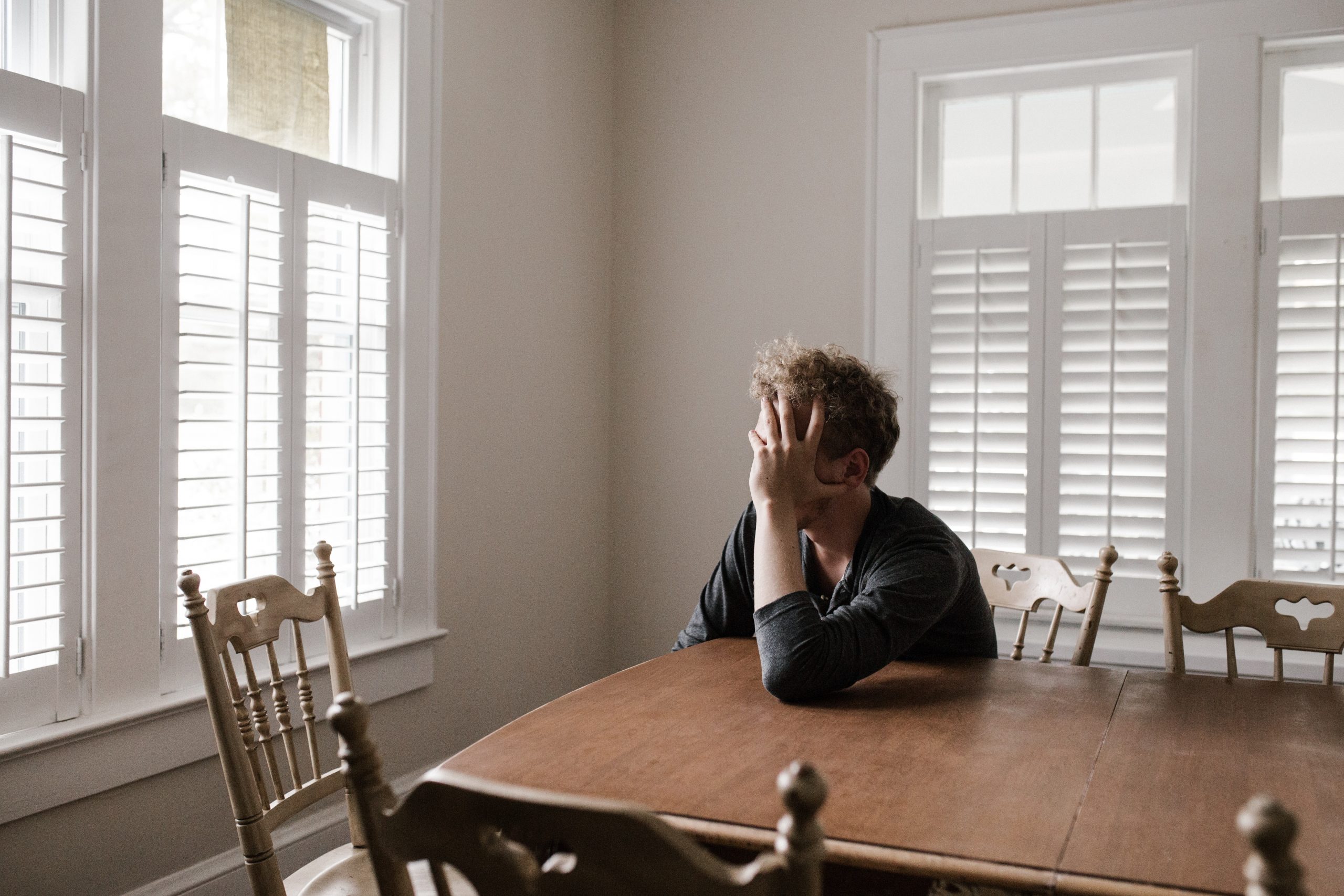
Bodily symptoms and reactions of anxiety
Anxiety is a high-intensity state, and it doesn't just affect our inner world and how we see ourselves. It also shows up through bodily symptoms and sensations. Think about how you feel when you're anxious and worried. You can be sure — you don't only feel tension. To help you identify your bodily symptoms and reactions, here are some examples:
- You feel irritable, on edge, impatient, even tired;
- Your heart races, you sweat, your breathing is shallow, you have a panic attack;
- Your body aches, you feel tension in some parts of it (chest, abdomen, head), you feel nauseous;
- Trembling in the limbs, dimming of vision, hot and cold flashes, suffocation;
- You're scattered, you can't concentrate, and your head feels like it's not on your shoulders;
- You're afraid to make a decision out of fear of getting it wrong;
- The symptoms of anxiety can also be similar to those of other illnesses — of the lungs, the thyroid, cardiovascular issues.
Sources used:
- Greenberger, Dennis & Padesky, Christine — "Mind Over Mood," Sofia, Iztok-Zapad, 2018
- Nmgenomix.com — Beyond worries — when does anxiety become a diagnosis?
- Dr. Pashkulev, Dimitar — Anxiety — everything we need to know about the mental disorder of the 21st century
- Remes, Olivia — How to cope with anxiety
- Folk, Jim — Body aches and pains anxiety symptoms