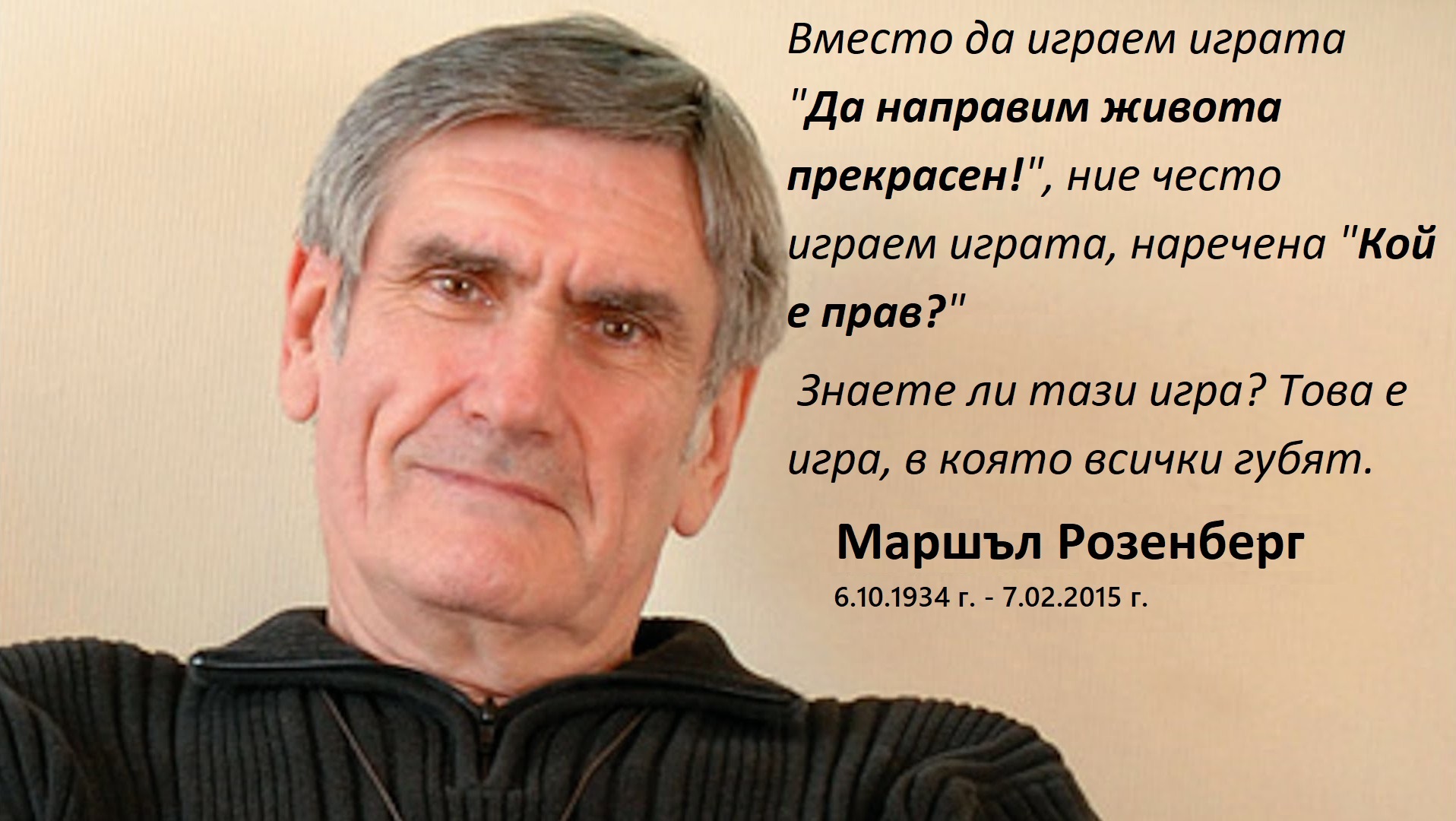
October 6 marks the 87th anniversary of the birth of the American psychologist and creator of the method of nonviolent communication (NVC), Marshall Rosenberg.
He developed nonviolent communication during the 1960s as a tool to stop segregation in schools in the United States. Dr. Rosenberg was motivated by a desire to help people connect with their own humanity and that of others with respect, compassion, peace, and joy. For more than 50 years, he traveled tirelessly, sharing NVC around the world. Marshall Rosenberg spent his final years at the Center for Nonviolent Communication, dedicating 250 days a year to practicing the method among different groups of people: teachers, doctors, the military, and even prisoners.
Today, more than 500 certified trainers share NVC in schools, healthcare, nonprofit organizations, prisons, corporations, churches, communities, and on the political stage in over 65 countries around the world.
What is nonviolent communication?
We know that "violence" means acting in ways that lead to harm. We are aware that violence is not just physical. In a great many cases, it is present in communication. We meet it in various forms — when we judge others, harass them with words, hold biases, blame them, point fingers at them, discriminate against them, talk without listening, criticize others or ourselves, label people, react sharply when we are angry, use political rhetoric, are defensive, or evaluate who is "good/bad" or what is "right/wrong" in people. These examples can truly be called "violent communication."

Nonviolent communication is based on the principle of ahimsa* — the natural state of compassion when there is no violence in the heart.
Marshall Rosenberg
*ahimsa comes from Sanskrit and is an ancient Indian principle of nonviolence that applies to all living beings.
Those who train in the method of NVC develop in themselves the following five core skills and attitudes:
1. Self-connection
We connect with ourselves and with the world through our experiences in our inner world. The ultimate goal of NVC is for this inner place to be filled with compassion, truth, clarity, and peace. To maintain self-connection, NVC suggests that the practitioner engage in a daily practice known as "Remembering." Examples of remembering practices include meditation, prayer, inspiring readings, poetry, inspiring music, and quiet time in nature.
2. Honest expression
We express ourselves vulnerably and without criticism or blame. We reveal our feelings and needs and ask for what we want, without demanding it.
3. Empathic Presence
We listen to others with a quiet mind and an open heart. Our only goal is to connect with the speaker by understanding their feelings and needs, deeply and without judgment. We try to remain empathetic, even when we feel like criticizing, blaming, or other similar forms of communication.
4. Self Empathy
When we are no longer able to bear with the other person, when we get angry with them, we take time to "air out" our judgment in the privacy of our own mind. We identify, acknowledge, and connect with our unmet needs that have arisen out of this interaction. We allow ourselves to grieve the pain of our unmet needs. This process allows us to reconnect with our essence.
We use compassion toward ourselves by allowing ourselves first to heal inside from the disappointment, then to celebrate the needs that have been met, or simply to climb one more step on the path toward good self-knowledge.
5. Use of power
We try to influence others in the context of connection, not through coercion. We want others to help us through natural giving, not through fear, guilt, shame, duty, desire for reward, or buying love. We care about the needs of others as our own, and we commit to seeking solutions that satisfy the needs of everyone involved in the communication.
The elements of nonviolent communication
There are five mandatory steps or elements in the process of NVC. When communication with another person isn't working out, we can remind ourselves of them by asking ourselves these questions:
Awareness
Am I connected with myself? Am I expressing myself honestly and vulnerably? Am I listening with empathy? Do I value the needs of others as my own? Am I committed to seeking solutions that can satisfy everyone's needs?
Thought
Is there judgment or blame in my awareness? Am I angry or resentful in this moment as I communicate with the other person?
Language
Is there criticism and blame in what I am saying?
Communication
What is my non-verbal communication — the tone of my voice and my body language — does it match my words?
Use of power
Do I want to subdue this person in order to get what I want? Do I care about their needs as my own? Am I expressing myself openly or covertly? Am I willing to stay in dialogue until we find a solution that's right for both of us?
Out beyond ideas of right and wrong there is a field — I'll meet you there.
Rumi
If I use nonviolent communication, I never, never, never hear what anyone thinks of me. Never want to know what anyone thinks of you — that way you'll live longer. You'll enjoy life more. Hear the truth. The truth is that, if someone is telling you what you are, then that person has a need that's not being met. Hear that they're in pain. Don't hear the analysis.
Marshall Rosenberg
Empathy is a respectful understanding of what others are experiencing. Instead of offering empathy, we often have a strong urge to give advice or reassurance and to explain our own position or feelings. Empathy, however, calls upon us to empty our minds and listen to others with our whole being.
Marshall Rosenberg
Your presence is the most precious gift you can give to another human being.
Marshall Rosenberg
Instead of playing the game "Make Life Wonderful," we often play the game called "Who's Right?" Do you know that game? It's a game where everyone loses.
Marshall Rosenberg
Every criticism, judgment, diagnosis, and expression of anger is the tragic expression of an unmet need.
Marshall Rosenberg
We are never angry because of what others say or do. Our thinking is what makes us angry.
Marshall Rosenberg