Coping with negative emotions. Eight exercises for managing them.
The first part of the article Emotions under the magnifying glass — part one — Understanding emotions and their impact on us ended with the surprise (for some of you) that, in fact, it isn't the negative emotion itself that makes us ill, but the inability to manage the storm of emotions — the virus that infects our mind, soul, and body. Literally and figuratively. Several examples of this were also examined.
Psychosomatics is a term in psychotherapy that explains and examines these phenomena. When you "get sick," the feeling is awful — you want to curl up in a ball and for the world to stop spinning, because you can't keep up with the world's expectations (or your own of yourself). You want to run away, to change everything or yourself with a magic wand. But life is a different kind of fantasy. The process is long and hard, sown with more such "illnesses." Just as we take medicine and care for ourselves when treating the flu, the same is true of the cure for our thoughts and our soul.

It is extremely important to know that no one is alone in this war — we are all fighting against (and fighting to accept) our own demons and bad characters, born of our difficult emotions. Below you will also find several methods for coping with them.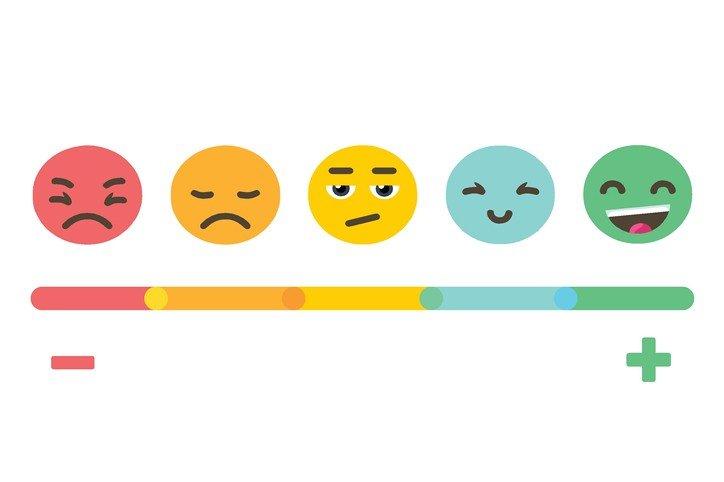
Coping with (and managing) emotions
Randy B. Noyes, in his book "The Art of Self-Leadership," sets out 8 exercises and examples for managing emotions:
- The "Test Yourself" exercise for getting in touch with yourself — check what you feel and what your body is telling you, whether it's tense and uneasy, and where exactly you feel it — in the heart, stomach, head;
- A written exercise for describing your feelings — full description and acknowledgment without censorship;
- An exercise with a recording — a free expression of feelings and thoughts using a recording device. Then look at or listen to yourself from the outside, like an outsider would. How differently you'll see yourself!
- Hitting until all the feelings come out — scream in a place where no one will hear you, and hit something that won't hurt you. Enjoy the freedom and lightness that come afterward;
- Face your feelings — breathe in and out consciously several times, look closely at the feeling, observe it, acknowledge that it is there;
- Expressing feelings through art — singing, drawing, writing — give shape to what you are feeling through creativity;
- A sharing exercise — don't be afraid and don't suppress yourself, share with someone you trust. Be brave. Courage is the experience of fear;
- Mental training — breathe with your eyes closed for 15-20 minutes and don't think about anything; relax and calm down.
Don't underestimate this kind of mental training, and don't think it doesn't work before you've truly put in some effort and tried it. You're doing it for yourself after all. It is precisely taking responsibility for our actions, as well as for our thinking, emotions, and feelings, that turns us into grown-up and mature people. Not age, social status, and family situation. It looks frightening and scary, especially if we are used to having someone else take responsibility for us and make decisions for us. Sometimes we least expect a good outcome and find ourselves very pleasantly surprised.

If Randy B. Noyes's exercises don't seem effective to you, other suggestions are drawing up and filling in a thought-record table. In "Mind Over Mood", Dennis Greenberger and Christine Padesky share cases with their clients to whom they give the table, in which to fill in what happened, what emotions they felt, what thoughts went through their head, what beliefs support these thoughts and which do not, an alternative possibility for the situation, and finally to rate their emotional state again from 0 to 100%. You may end up discovering exactly what makes you feel and think a certain way, and decide to make the change. But let's emphasize that our emotions and thoughts are not scientific facts, and we should not accept them as universal truth. They are simply our reaction to and interpretation of the events and incidents in our lives.
The other method you can try may seem rather scary and off-putting, but it's called "take the challenge," and through it you face the emotion and defeat it.
Step out of your comfort zone and do what you are afraid of and what worries you. Find the strength within yourself, because you are the only person you can absolutely always rely on, and the one who will never betray you. Trust your own judgments and abilities, think about the worst that can happen, and convince yourself that the problem is not life-or-death. It's only in your head. After you stand up to the emotion, the feeling is supreme. You have fought and won. You are a hero!

The secret
Becoming aware of and coping with emotions is one of the many challenges we encounter in life. And it is not at all to be underestimated. Pushing difficult emotions aside will, over time, only make them harder, and they will not resolve and disappear on their own, no matter how much we hope they will. They will lie in wait for us like predators in the dark corners of our undiscovered consciousness, ready to capture us when we least expect it. They are the monster under the bed, the goblins in the wardrobe.
Let us discover them first, meet them with humility and acceptance — however much we don't like them, they are part of us. This is the secret to coping with emotions, and it does not lie in avoiding, bottling up, and ignoring. It is time to welcome our emotions and to learn from them everything we can. Let's not expect a result the first time.

Dear, highly sensitive people, don't even hope, because you really won't get the way out you're looking for quickly. You don't recover from the flu after the first pill — it takes several days. It takes some time and trying to discover your way, the one that best helps you to get back on your feet, to believe in your strength and your possibilities, and to become the person you dream of being. Accept therapeutic help if you don't know how to cope. You are not damaged or crazy, you are just highly sensitive and want to take care of yourself. And let everyone think what they want. The one who judges has problems too, and to face them and take action is a decision worthy of respect and admiration. Don't give up.

Author: Tanya Mihaylova
More from the same author:
Sources:
- Greenberger, Dennis and Padesky, Christine — Mind Over Mood, Sofia, Iztok-Zapad, 2018
- B. Noyes, Randy — The Art of Self-Leadership, Sofia, Persei, 2010
- Dyer, Wayne — Everyday Wisdom, Sofia, Kibea
- Psych2go, 8 signs you're highly sensitive person (HSP)
Books that help with understanding and coping with emotions: