Our relationships with everyone else throughout our lives depend on our connection at the earliest age with the significant person who is raising us. We have heard how important secure, good, and high-quality bonding between parent and baby is. Responding to their crying, gentle treatment, cuddling, talking, and overall creating a sense of safety. Now we'll also introduce the main researchers who have shed light on the question of human bonds.

John Bowlby (1907-1990)
John Bowlby's attachment theory
Bowlby's evolutionary theory of attachment proposes that children come into the world biologically programmed to form attachments with others, because this will help them survive. The child has an innate need to attach to a single primary figure. This is called monotropy.
This concept suggests that there is one bond that is more important than all others. Bowlby's monotropic theory of attachment suggests that attachment is important for the child's survival. Attachment behavior in both babies and the people who care for them has evolved through natural selection. This means that babies are biologically programmed with innate behaviors that ensure attachment will form. Although Bowlby did not rule out the possibility of other attachment figures, he believed that there must be a primary bond that is far more important than any other (usually with the mother).

Critical period of attachment
Bowlby suggested that there is a critical period for attachment development (2.5 years). If attachment has not developed during this period of time, then it may not happen at all. Later in his research, Bowlby suggested that the period for forming attachment can be considered as extending up to age 5. If the attachment figure is disrupted during the critical two-year period, the child will suffer irreversible long-term consequences from this maternal deprivation. This risk continues until age five.
Deprivation of love and security from a significant adult
Bowlby's maternal deprivation hypothesis proposes that the continual disruption of the attachment between the baby and the primary caregiver can lead to long-term cognitive, social, and emotional difficulties for the child.

Effects of deprivation
Bowlby originally believed that the effects were permanent and irreversible, leading to:
delinquency, reduced intelligence, increased aggression, depression, and affectionless psychopathy.
Affectionless psychopathy is the inability to show affection or concern for others. Such people act impulsively without paying attention to the consequences of their actions. For example, not showing guilt over antisocial behavior.
The stages of distress in babies when bonding is broken
John Bowlby, working together with James Robertson (1952), noted that children experience strong distress (prolonged stress) when separated from their mothers. Even when such children were fed by other caregivers, this did not reduce the child's anxiety.
1. Protest
The child cries, screams, and protests angrily when the parent leaves. They will try to cling to the parent to prevent them from going.
2. Despair
The child's protests start to subside, and they appear calmer, but still upset. The child rejects others' attempts to comfort them, and often appears withdrawn and uninterested in anything.

3. Detachment
If the separation continues, the child will start engaging with other people again. They will reject the primary figure on their return and will show strong signs of anger.
The discoveries of Mary Ainsworth (1913-1999)
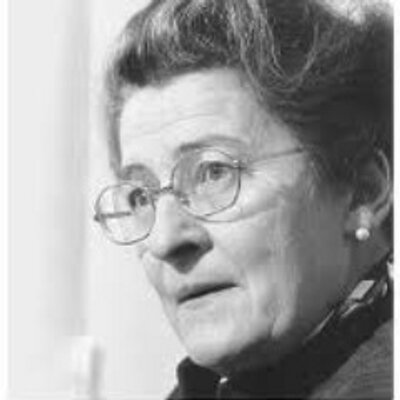
Mary Ainsworth (1913-1999)
Another significant scholar in the field of developmental psychology, Mary Ainsworth, also contributed to attachment theory. She identified three main patterns by which infants attach to the primary people who care for them.
Avoidant attachment — Group A
Children with an avoidant attachment style tend to avoid interaction with the caregiver and do not show distress during separation. This may be because the parent has neglected attempts at closeness, and the child may internalize the belief that they cannot depend on this or any other relationship.
A Group A baby is characterized as showing little or no tendency to seek closeness with the mother. The baby often shows no distress during separation from the mother, interacts with the stranger in a way similar to how he or she would interact with the mother, and shows mild signs of avoidance (turning away, avoiding eye contact, etc.) when reunited with the mother.
Ainsworth and her colleagues interpret the avoidant behavior of Group A babies as a defense mechanism against their mothers' own rejecting behavior, such as discomfort with physical contact or being more easily angered by the babies.

Secure attachment — Group B
Bowlby (1988) describes secure attachment as the ability to bond well and securely in relationships with others, while at the same time having the capacity for autonomous action depending on the situation. Secure attachment is characterized by trust, an adaptive reaction to abandonment, and the belief that one is worthy of love.
A Group B baby was characterized as actively seeking and maintaining closeness with the mother, especially during the reunion episode. The baby may or may not be friendly with the stranger, but always shows greater interest in interacting with the mother.
Ainsworth and her colleagues interpret Group B babies as securely attached to their mothers, showing less anxiety and a more positive attitude toward the relationship, probably because they trust their mothers' responsiveness to their needs.

Ambivalent attachment — Group C
Ambivalent attachment relationships are characterized by worry that others won't reciprocate one's desire for closeness. This happens when the baby learns that the caregiver or parent is unreliable and does not consistently provide responsive care to their needs.
A Group C baby is characterized as somewhat ambivalent (and resistant) toward the mother. The baby often shows signs of resistance during interaction with the mother, especially during reunion.
However, once contact with the mother is established, the baby also shows strong intent to maintain that contact. Overall, Group C babies often show maladaptive behavior.
Ainsworth and her colleagues found that Group C babies were anxious and uncertain about the responsiveness of their mothers, since it was observed that the mothers of Group C babies lacked a "fine-tuned sense" for responding to the babies' needs.
Disorganized attachment — Group D
M. Main and J. Solomon (1986) found that a significant portion of babies didn't actually fit into Groups A, B, or C. They categorized these babies as Group D — the disorganized type of attachment.
Disorganized attachment is classified for children who show sequences of behaviors that have no readily noticeable goals or intentions, including apparently contradictory behaviors or fading/freezing of movements.
M. Main and J. Solomon found that the parents of Group D babies had unresolved trauma related to attachment, which causes the parents to show either frightened or frightening behavior, which in turn results in Group D babies being confused, or forced to rely on someone whom they simultaneously fear.