Is there at least one person at your work whom you don't get along with? Or someone who approaches things so differently from you that every conversation with them is a test of your social skills?
If this sounds familiar, you are not alone. Everyone has colleagues with whom communication is difficult. And yet, in the name of teamwork, it would be good if we could make these relationships work.
The good news is that there are ways to make this happen. The first step is to understand more about your own personality and that of the other person.
Personality assessments have existed since Hippocrates derived four temperaments around 460 BC: sanguine, choleric, phlegmatic, and melancholic. Hundreds of theories and tests have followed those models, leading to the development of personality tests in the 21st century.
Hippocrates
The DISC model, based on the work of psychologist William Moulton Marston in the 1920s, is a popular, clear, standardized, and relatively easy way to assess behavioral styles and preferences.
The tool classifies people's behavior into four types: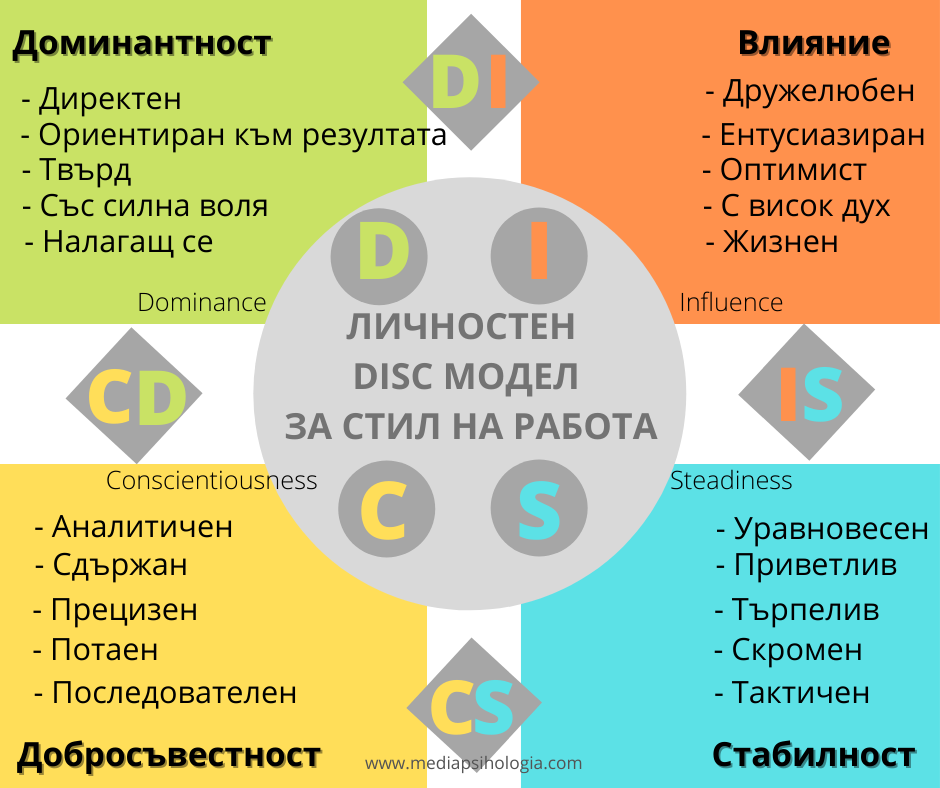
William Moulton Marston
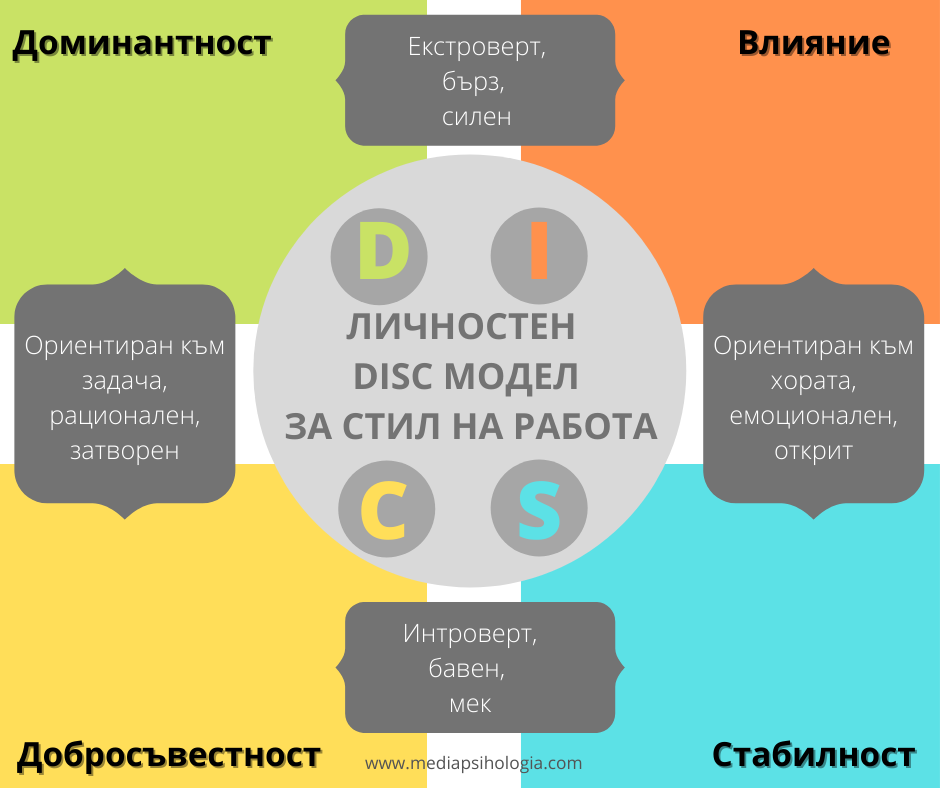
Marston views the different types of people on two diametrically opposed scales:
Task- and goal-oriented (D and C) versus People- and relationship-oriented (I and S)
Fast-paced (D and I) versus Moderate work pace (S and C).
These scales form the axes of the DISC model. The behavioral types are shown in the four quadrants of the figure:
The DISC assessment uses standardized and representative data from a large sample of people who have already taken the test. Most often we see people who contain in themselves two of the types of the DISC model. Most rarely — three types.
What is typical of each of the DISC types:
Dominance (D): they are able to hold the reins of work tightly, to command respect, and to maintain boundaries while seeing the big picture. They work on a grand scale. They are often self-centered, talking more than they listen. They have a strong, openly expressed personal opinion. They are also decisive, strong-willed, direct, and frank without much concern for others' feelings, independent, and natural leaders. They like to be in professional roles that bring them power and authority, prestige, and challenge.

Influence (I): these are all the people who launch new projects, love being on display, and have no qualms about being at the center of events. They have the skill to draw others into their new ideas, and they are usually the soul of any conversation. They talk more than they listen. Endlessly charming, persuasive, emotional. They have a sense of humor, are open, quick-thinking, and always open to making new acquaintances. They like to take on professional commitments where they will receive approval, recognition, popularity, and significance.

Steadiness (S): people with the predominant traits of this type are calm and even-tempered. You'll hear them ask more questions and show interest in others, rather than tell people what to do and how to do it. They are open to everyone's questions. They listen to and counsel them calmly and patiently, without being stingy with information. They believe that by giving their knowledge, they help the environment around them grow, and in this way they grow themselves too. They respect differences, often agree with others, and if they disagree they will say so with care and respect for the other person. Anyone can trust them, and they are able to bring any project to completion. They don't like change. The professional roles that suit them are those connected with standardization and security, repeatability, and a calm environment.

Conscientiousness (C): structured, orderly people who stick to the rules and can focus on a single task. They love precision and have skills for deep analysis. They are diplomatic and considerate of other people. You won't hear them raise their voice. In fact, they rarely speak, because they prefer to listen to others. Strong introverts who can spend hours buried in numbers or another favorite occupation. They have a hard time socializing and usually don't fit in at noisy parties during team-building events. They prefer solitude and calm. They like to step into professional roles that are characterized by clear expectations, autonomy, the opportunity to reach expert levels, and high professionalism.
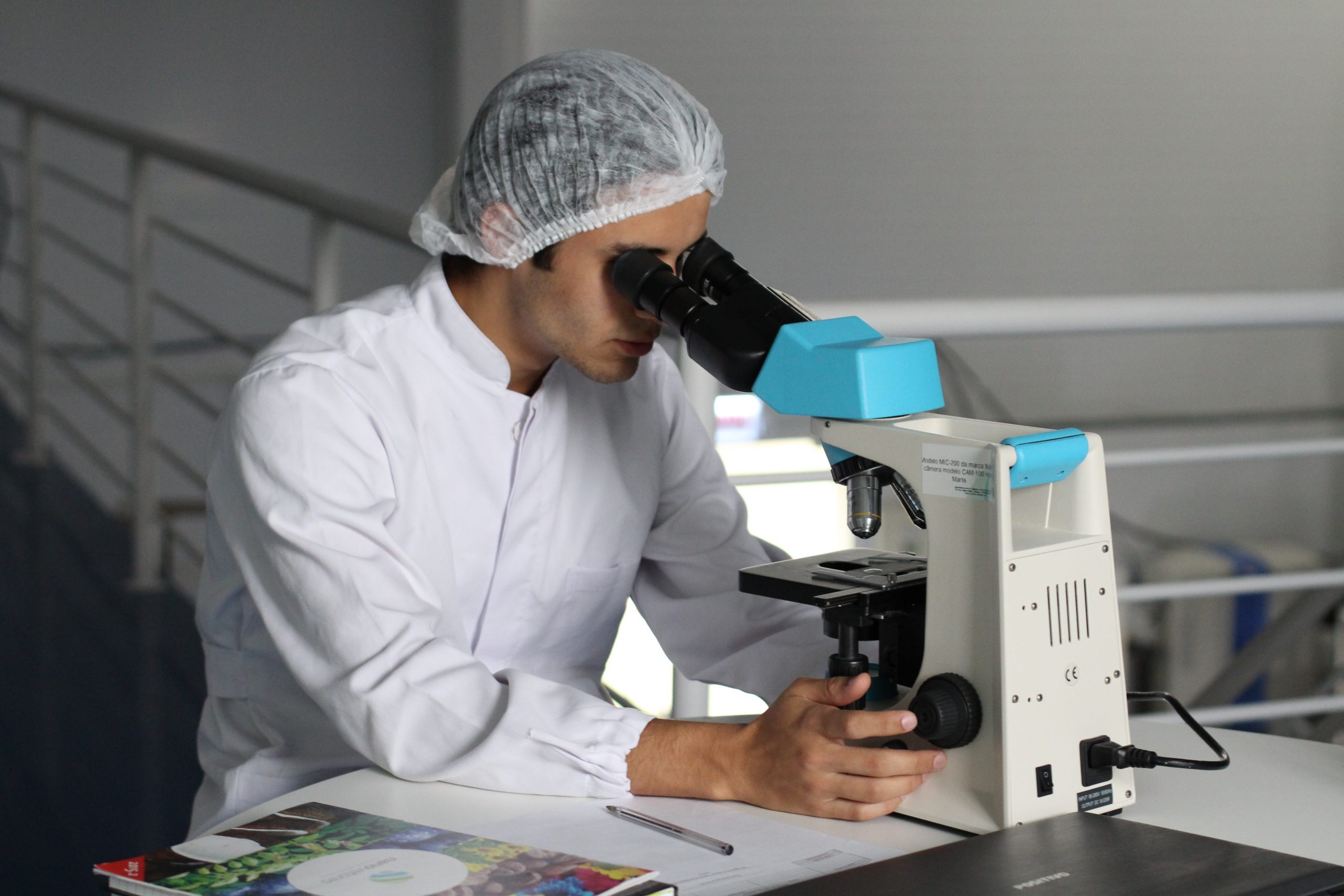
If the four types work on one team, the interaction between them can be described with one simple example: the Dominant (D) sets a strategic task, the Influencer (I) comes up with the project that will serve this task, the Steady (S) plans the project in stages and takes it through to completion, and the Conscientious (C) analyzes it and works it out in detail, watching over its precise execution. Identifying our own strengths and those of our colleagues helps to reduce unrealistic expectations of ourselves and those around us. This in itself reduces the level of stress and conflict.
Possible professions for a pure Dominance type: chief executive officer, entrepreneur, lawyer, police officer, stockbroker.
Possible professions for a pure Influence type: creative director, graphic designer, public relations, real-estate broker, travel agent, presenter.
Possible professions for a pure Steadiness type: customer service, counselor, psychologist, therapist, human resources, nurse.
Possible professions for a pure Conscientiousness type: computer specialist, accountant, researcher, scientist.

Possible professions for a combination of Dominance with Influence are: art director, investment banker, journalist, marketing director, lecturer/teacher.
If Influence predominates over Dominance: chief commercial officer, real-estate brokers, casting directors, travel agents, writers.
Possible professions for a combination of Dominance with Conscientiousness are: architect, lawyer, operations manager, project manager, doctor, musician, actor.
If Conscientiousness predominates over Dominance: architect, business strategist, chief financial officer (CFO), manager, doctor.
Possible professions for a combination of Influence with Steadiness are: copywriter, minister, public relations, retail sales, substitute teacher.
If Steadiness predominates over Influence: academic advisor, counselor/psychologist, Human Resources manager, teacher, therapist.
Possible professions for a combination of Steadiness and Conscientiousness: cashier, accountant, data analyst, pharmacist, quality assurance analyst, scientist.
If Conscientiousness predominates over Steadiness: air traffic control, database administrator, IT director, research scientist, systems administrator.
To find out what personality type you are according to the DISC model, take our TEST.
Using the tool, you might learn, for example, that you are very people-oriented compared to others. This may lead you to use a more task-oriented approach in situations where you want to build better interaction with members of your team who are themselves task-oriented.
Behavioral models like this one can help you deal with the many different people you communicate with in your professional and personal life. By understanding that everyone has different preferences, you can improve your interpersonal relationships and manage team members in a way that is focused on their strengths.

Become an author at mediapsihologia.com. Write to us at info@mediapsihologia.com