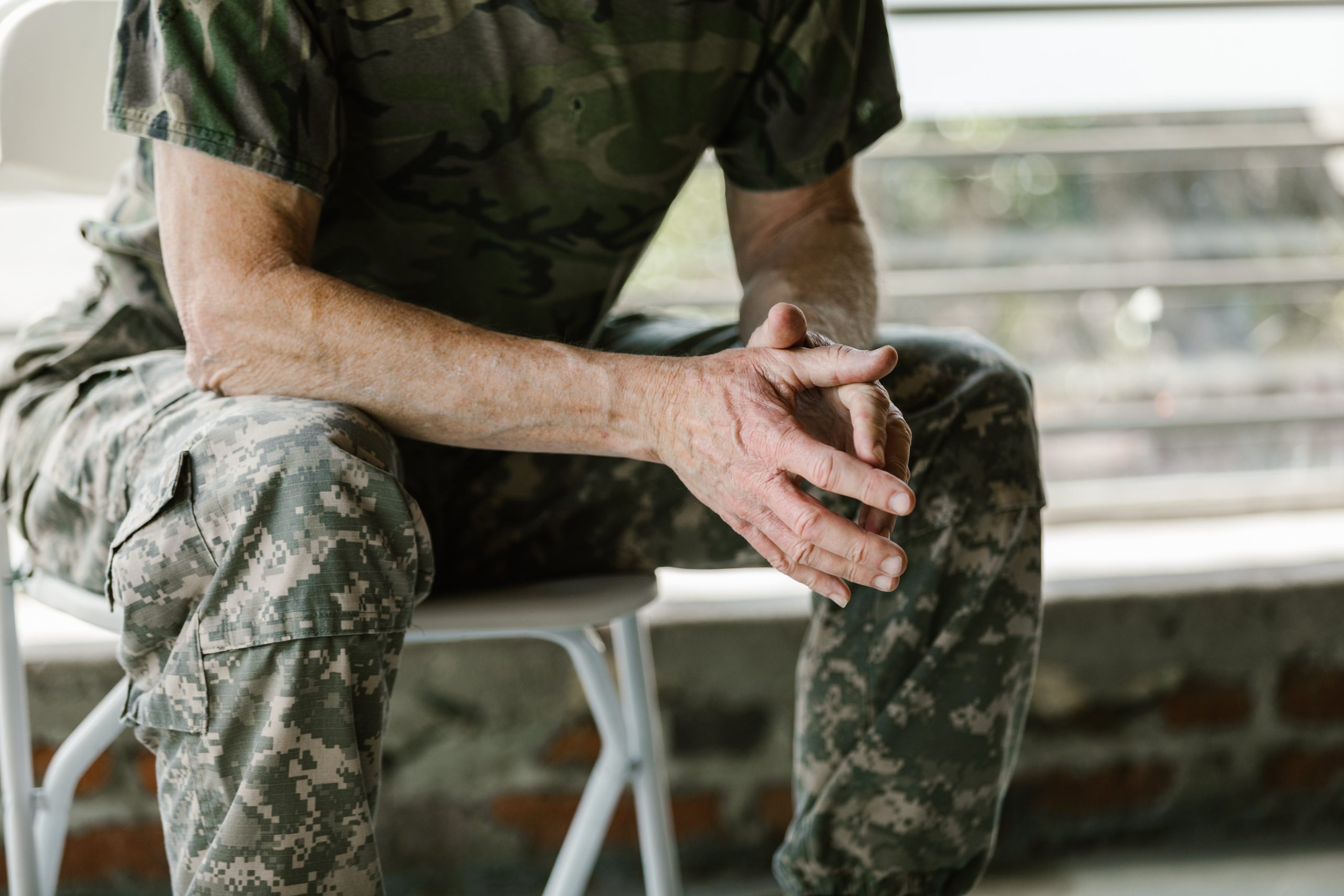
A psychotherapist contacted us recently and, at the request of one of her clients, shared with the site a story about a dangerous scam. The heart-rending narrative can empty the bank account of any softer-hearted woman, so the victim wants to protect other Bulgarian women and men from the mistake she made. For obvious reasons the affected woman wants to remain anonymous.
The scammer's profile
He's around 40, a good-looking, broad-shouldered, tattooed American with photos on Instagram including his 10-year-old daughter. In one of the photos he's cuddling cute puppies. There are also pictures from a golf course. At first glance, nothing would arouse the suspicion of the 36-year-old Bulgarian woman who, one day, gets a private message on Instagram: "Hi, how are you?" The conversation then moves to Viber.
The man turns out to be an officer in the U.S. Army, serving in a border zone in Syria. He has a daughter and has been a widower for about two years. His wife was killed in a car accident, and he was approaching retirement age and looking forward to leaving the place where, recently, a colleague of his had been killed and another wounded.
He adored his daughter, who lived at a boarding school in the States, and to our compatriot's questions like "Where are her grandparents?" he answered that his parents had died long ago and his daughter didn't want to live with his wife's parents. The stories were backed up with photos with army buddies, and the topic of the war remained confidential. Because of the nature of his work, he had no way to do a video call.
The Bulgarian woman quickly gets caught in the handsome officer's charming words, and after just a few days of messaging she's already ready to meet him — he promises he'll come to Bulgaria when he retires. A few days later the man reports that one of his commanders has been released early because his wife sent a letter asking for his discharge.
The moment of the scam
Our compatriot, by then being called "My love" by the American, falls into the well-prepared trap and asks of her own accord whether anyone could help him in the same way. He, of course, says he can't ask for such a big thing. He wouldn't ask it of a woman who doesn't know him, and so on. The compassionate woman replied that it was no problem for her to write an email and present herself as his fiancée. The American gave her the email address of his command, to which the request for early release was sent. They said that this was possible, but that she had to vouch for him with a sum of $1,500.
The smitten woman didn't hesitate, knowing that she'd soon meet her beloved, and followed all the instructions of the "general," who gave her a bank account in Turkey. On the day she transferred the money, the woman met with a psychologist and excitedly shared the new developments in her life. The therapist replied that she had read years ago about scams involving American soldiers or doctors stationed in Afghanistan or Syria, and asked her client to look up information about it on Google. The sites she found confirmed the suspicions, but the would-be fiancée — scalded with boiling water — still didn't want to believe it.
The supposed soldier kept feeding her hope that this wasn't a scam — he never stopped writing and thanking her for her noble gesture. He planned his arrival in Bulgaria and continued sending beautiful photos of himself in uniform from Syria. At her next session with her psychologist, the client said maybe this story wasn't a scam after all, and that perhaps this really was her man. She added that if it did turn out to be a scam, in the end she'd have paid the price for her own foolishness.
The resolution
The unmistakable sign of fraud wasn't long in coming: the woman received an email from the fake Syria headquarters saying she had to pre-pay his plane tickets to the U.S., to the tune of $4,500. The protagonist of our story cut off all communication, blocked the scammer, and asked the psychologist to tell other potential victims, since she felt too ashamed to do it herself.
We checked into the scammers' typical schemes. It turns out that after "burning" many Russian women and men in their longing to marry American soldiers, the inventive con artists — who usually live in Nigeria or Ghana — have spread to new territories. Articles on the topic on Bulgarian sites date back to 2018, and have run plotlines including millions found in Syria that need to be moved to another country, with the helper getting a percentage of the profit. The female "soldiers" usually look like beautiful models in uniform, and the men like sculpted American actors.
What's even sadder is that these are photos of real service members, whose family pictures have been pulled from their profiles and used to set up new accounts. According to this article, Facebook has taken down over 2.2 billion fake profiles of soldiers and military doctors.